

A regional manufacturer of packaged snacks and spice blends replaced spreadsheet recipes, paper QC checklists, and a standalone billing tool with  Manufacturing and Quality — bringing recipe control, batch traceability, and dispatch discipline into one system spanning purchase, production, and sales.
Manufacturing and Quality — bringing recipe control, batch traceability, and dispatch discipline into one system spanning purchase, production, and sales.
A regional manufacturer of packaged snacks and spice blends replaced spreadsheet recipes, paper QC checklists, and a standalone billing tool with Manufacturing and Quality — bringing recipe control, batch traceability, and dispatch discipline into one system spanning purchase, production, and sales.
Manufacturing and Quality — bringing recipe control, batch traceability, and dispatch discipline into one system spanning purchase, production, and sales.
VayaSoft implemented ERP to bring these activities together on one platform. The solution connected the complete process — from lead generation and quotation to solar installation, project completion, invoicing, and AMC service. This helped the company manage residential, commercial, and industrial solar projects with better visibility and control.
ERP to bring these activities together on one platform. The solution connected the complete process — from lead generation and quotation to solar installation, project completion, invoicing, and AMC service. This helped the company manage residential, commercial, and industrial solar projects with better visibility and control. 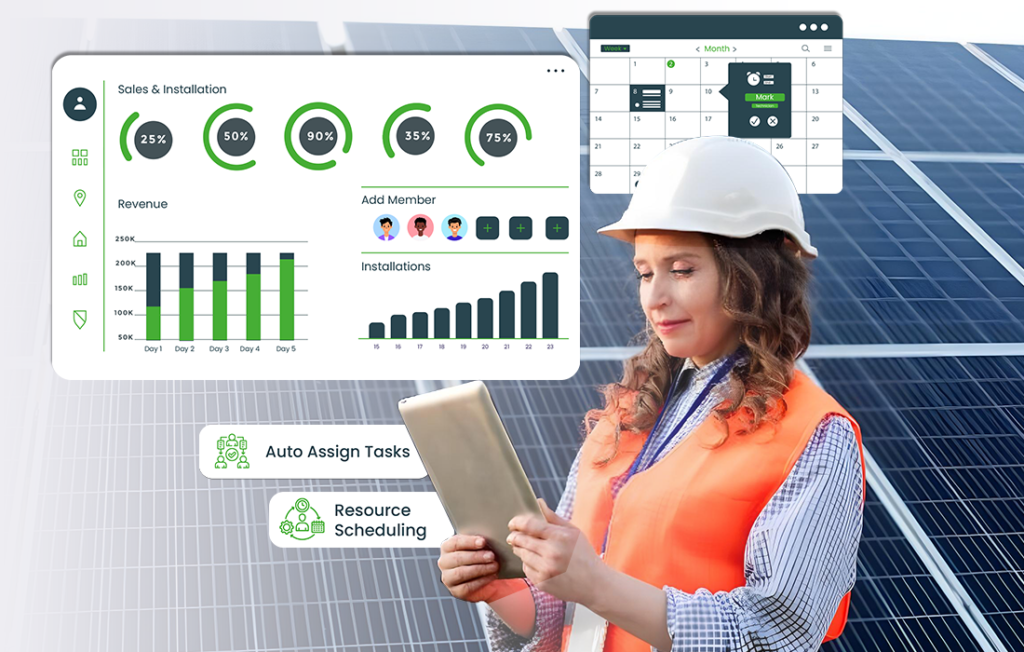
VayaSoft implemented ERP to create a connected workflow for the company's complete solar business.
Lead & CRM Management
Solar Quotation & Sales
Site Survey & Project Planning
Inventory & Material Management
Purchase Management
Installation & Field Service
Invoicing & Accounting
AMC & After-Sales Service
Lead & CRM Management
CRM was used to manage enquiries from residential, commercial,
and industrial customers.
- New solar enquiries
- Customer requirements
- Follow-ups
- Site survey requirements
- Quotations
- Sales opportunities
- Conversion status
Solar Quotation & Sales
The sales team could prepare quotations based on the customer's solar requirements, including panels, inverters, mounting structures, batteries, installation services, and other required products or services.
Once the quotation was confirmed, the information could move directly into project execution and delivery processes.
Site Survey & Project Planning
Site survey information was connected with the customer and project, allowing the team to maintain important project details before installation.
Projects could then be planned with:
- Project milestones
- Installation activities
- Responsible employees
- Planned dates
- Material requirements
- Customer information
- Project documents
Inventory & Material Management
Inventory was used to manage solar equipment and installation
materials.
The company could track items such as:
- Solar panels
- Inverters
- Batteries
- Mounting structures
- DC/AC cables
- Electrical components
- Installation accessories
Material movement from warehouse to project site could be tracked, providing better control over project consumption and stock availability.
Purchase Management
Purchase helped the company manage procurement based on project
requirements. Purchase teams could create RFQs and purchase orders
while maintaining visibility of required materials, suppliers,
quantities, costs, and expected deliveries.
Installation & Field Service
Installation teams could manage site activities and service tasks
through . Each project could have its own installation
activities, assigned team members, planned dates, and completion
status.
After installation, the same system could be used to manage customer service requests and maintenance activities.
Invoicing & Accounting
Accounting connected project activities with financial
operations.
The company could manage:
- Customer invoices
- Advance payments
- Project billing
- Vendor bills
- Payment tracking
- Outstanding receivables
- Project-related expenses
This gave management better visibility into both project progress and financial performance.
AMC & After-Sales Service
Once a solar project was completed, the customer could continue to
be managed through 's service workflows.
AMC operations could include:
- Scheduled maintenance
- Customer service requests
- Preventive maintenance
- Breakdown services
- Service history
- Warranty information
- Technician assignment
- Service completion tracking
This allowed the company to maintain a complete customer and installation history after the project was handed over.
A regional manufacturer of packaged snacks and spice blends replaced spreadsheet recipes, paper QC checklists, and a standalone billing tool with Manufacturing and Quality — bringing recipe control, batch traceability, and dispatch discipline into one system spanning purchase, production, and sales.
Manufacturing and Quality — bringing recipe control, batch traceability, and dispatch discipline into one system spanning purchase, production, and sales. Looking to implement for your solar business?
From lead generation to quotation, site survey, procurement, installation, project billing, and AMC services, we’ll help you manage your complete solar business through one connected platform.
platform.